Custom Plaster Cornice & Heritage Restoration
Plaster cornices, coving, ceiling roses, centre panels and decorative mouldings — run in situ and cast fibrous, plus repair and restoration of damaged and heritage plasterwork. Ceiling Experts Ghana, since 1980, across Accra.
A plaster cornice is not an off-the-shelf product — it is run, cast and fixed by hand to the room, and when it is damaged it is repaired to match rather than replaced with something that nearly fits. Ceiling Experts Ghana has run, cast and restored decorative plasterwork across Accra since 1980 — cornices, coving, ceiling roses, centre panels and mouldings, from fresh runs in new homes to the careful repair of damaged and heritage plaster.
Why Plaster Cornice & Restoration Is a Craft, Not a Product
The most common disappointment with cornice work is a profile that does not match — a repaired length that reads as new, a rose that sits proud, a mitre that does not line up. Decorative plasterwork has no product standard and no certificate to fall back on; the quality is entirely in the hands that take the profile, cut the running mould, cast the section and fix it true. We work to the original profile and the room, so a repair disappears and a new run looks like it was always there.
Choosing Between a New Run and a Restoration
A new home or refurbishment usually wants a fresh cornice, coving and perhaps a centre rose run or cast to a chosen profile. An older or damaged property wants restoration — matching and repairing what is there, piecing in lost lengths and rebuilding worn enrichment. The decision is led by what already exists in the room: where there is sound original plasterwork to match, we restore to it; where there is none, we run or cast new to the room’s proportions.
Cornice & Plaster Services
Cornices & Coving
Plaster cornices and coving run or cast to profile — from simple coving for a clean perimeter to deeper moulded and enriched cornices for living rooms, halls and master suites.
Ceiling Roses & Centre Panels
Cast ceiling roses and decorative centre panels for pendant and chandelier positions, sized and centred to the room, with matching enrichment to the cornice where wanted.
Decorative Mouldings
Panel mouldings, corbels, brackets and enrichments cast and fixed to detail wall and ceiling lines — run to a chosen profile or matched to existing decorative plasterwork.
Repair & Restoration
Repair of damaged, cracked and water-affected cornices and roses, and restoration of heritage and older plasterwork — re-fixing loose lengths, piecing in lost sections and rebuilding worn enrichment by hand.
Re-running & Re-casting to Match
Where original lengths are lost, we take a squeeze of the surviving profile, cut a running mould or make a reverse mould, and re-run or re-cast the missing cornice, rose or moulding to match the existing work exactly.
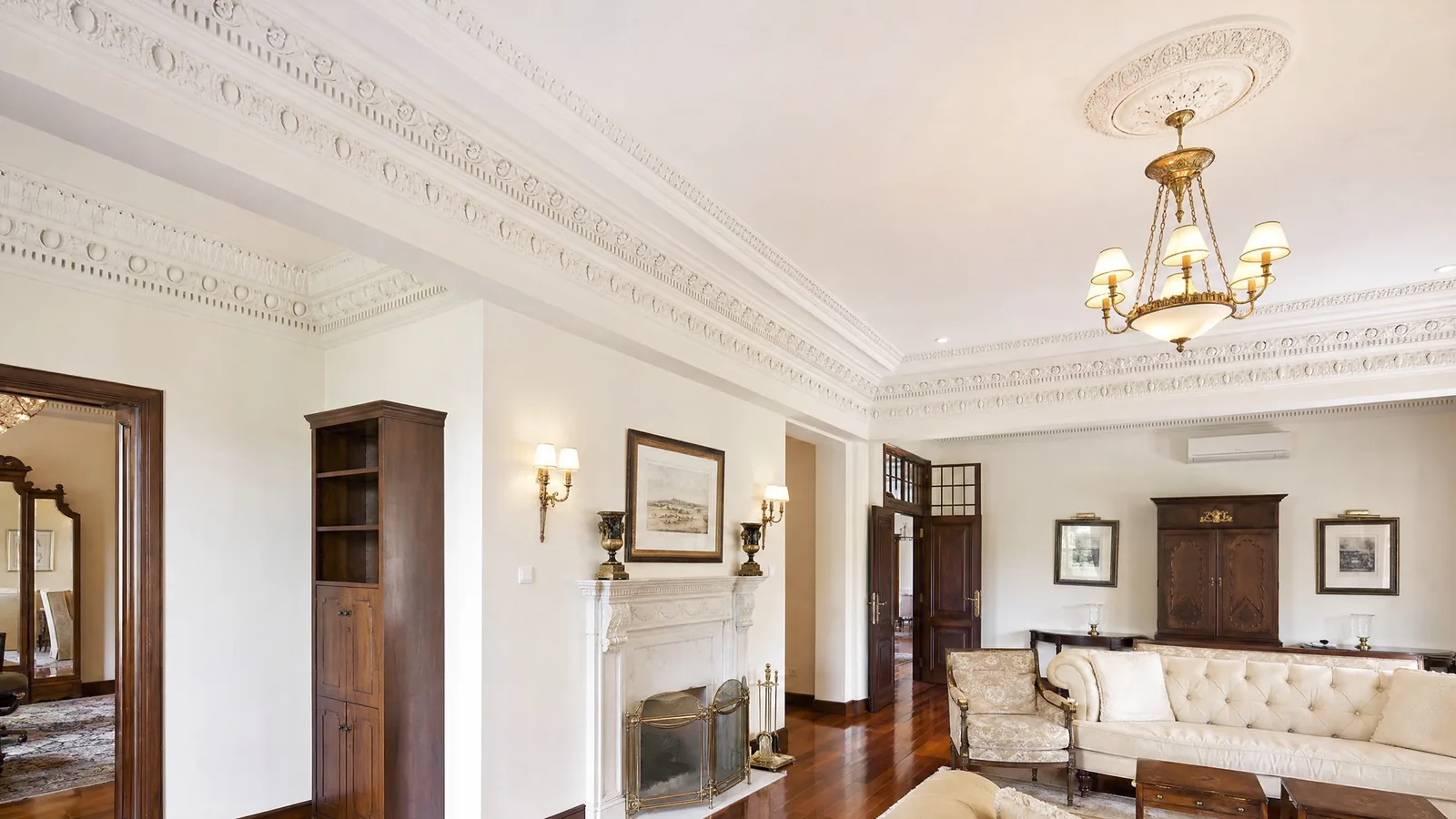
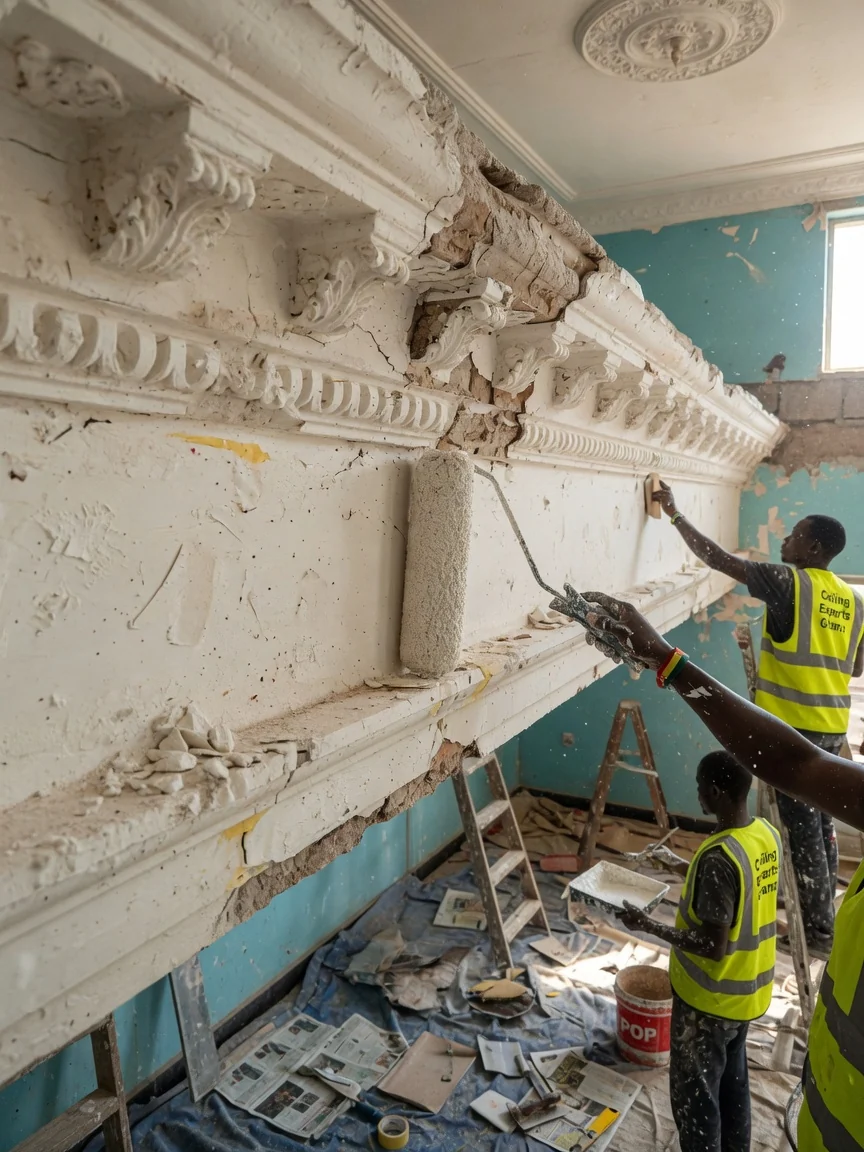
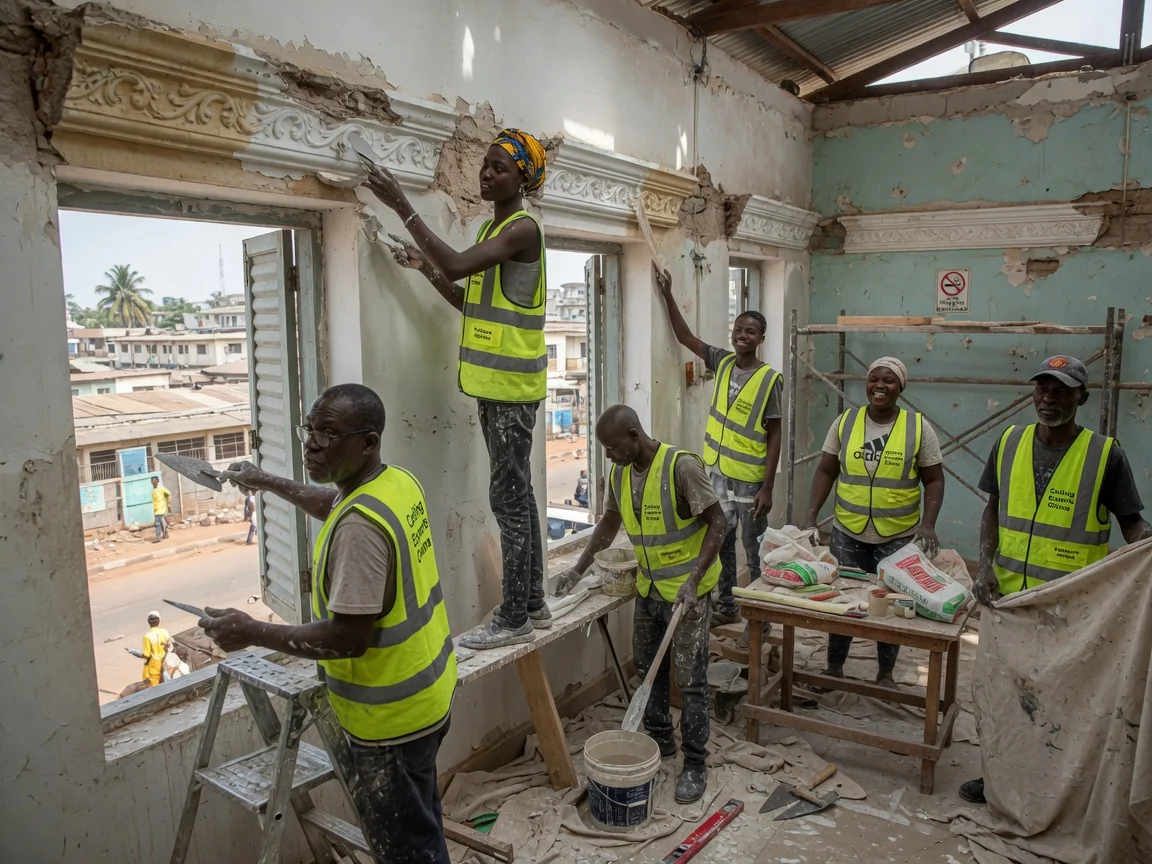
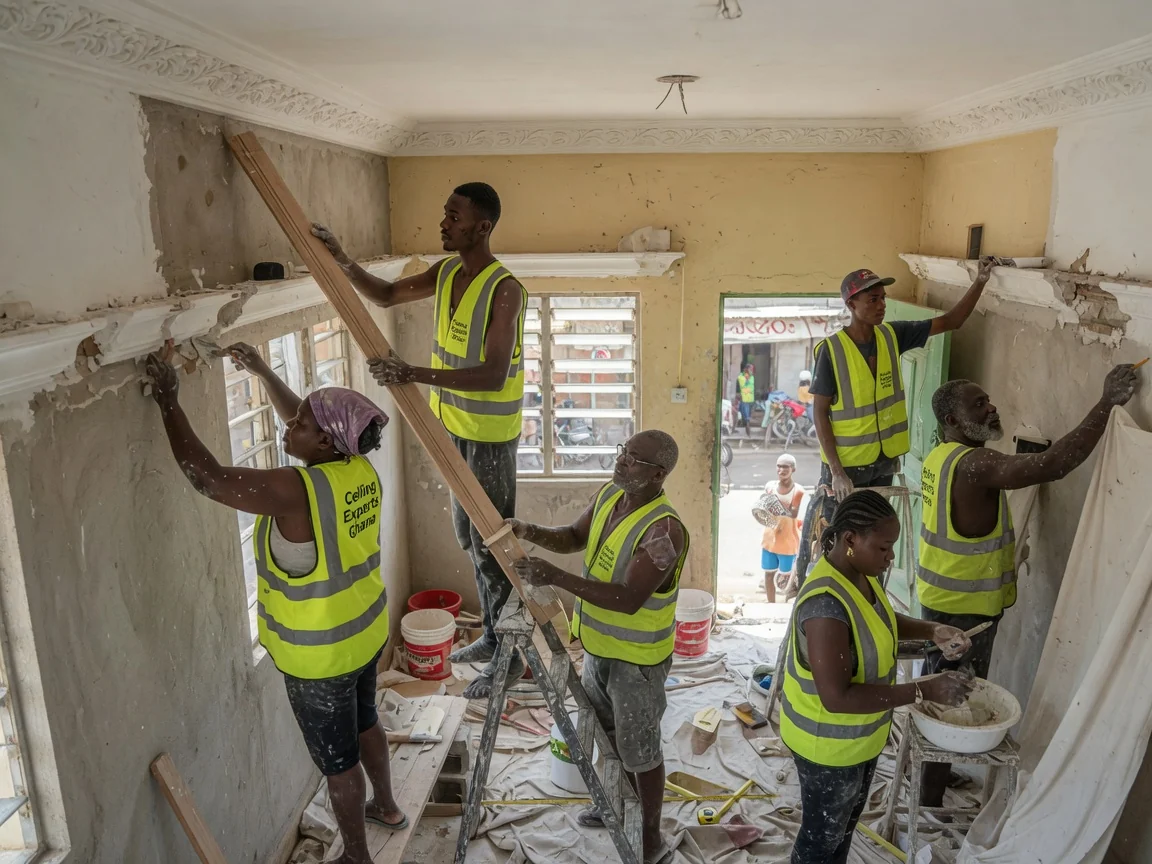
Cornice & Plaster Work We Carry Out
| Work | Best for | Method | Notes |
|---|---|---|---|
| Cornices & coving | Living rooms, halls, suites | Run in situ or cast fibrous | Simple coving to deep enriched cornice |
| Ceiling roses & centre panels | Pendant & chandelier positions | Cast fibrous, fixed & centred | Sized and centred to the room |
| Decorative mouldings | Panel & feature detailing | Cast and fixed to line | Run to profile or matched |
| Repair & restoration | Damaged & heritage plaster | Piece-in, re-fix, rebuild by hand | Cause addressed, not just damage |
| Re-running / re-casting | Lost or missing lengths | Squeeze, mould, re-run/re-cast | Matched to surviving profile |
How We Restore & Run Plaster Cornice
- Survey & matching the profile — existing plasterwork surveyed; a squeeze or template of the original profile taken; repair-in-place versus re-run/re-cast confirmed.
- Mould-making or in-situ setting-out — a reverse mould made for fibrous casting off-site, or a running mould cut and the wall/ceiling lines set out for in-situ work.
- Running, casting & fixing — cornice run against the running rule, or cast sections, roses and mouldings fixed and bedded in line, level and true.
- Repair, jointing & finishing — damaged sections pieced in, mitres and joints filled and rubbed flush, enrichment sharpened by hand, plaster left ready for decoration.
Materials & Real Standards
- Plaster cornice and decorative plasterwork is a craft finish — there is no product standard for it. The quality comes from the profile match, the mould-making, correct fixing and a properly run or cast surface, judged by eye and by hand against the original — not from a certificate.
- Run-in-situ work is formed in plaster against a running mould cut to the profile — best for long runs and matching irregular old work.
- Fibrous plaster is cast in moulds (plaster reinforced with hessian/scrim on a timber back) and fixed up in lengths — best for repeated enrichments, roses and panels.
- Restoration matches the surviving profile and depth, addresses the cause of the damage (movement, water, failed fixing), and pieces in or rebuilds rather than over-clads.
- Where a cornice meets a board ceiling, any gypsum/plasterboard used is specified to ASTM C1396 / EN 520; the plaster cornice itself carries no such standard.
What Affects the Cost
- Whether the work is a fresh run/cast or a restoration matching existing plaster
- The profile — simple coving versus a deep, enriched moulded cornice or detailed rose
- Run-in-situ versus cast fibrous, and the number of mitres, returns and centre features
- The extent of damage, lost lengths and enrichment to be rebuilt on a restoration
- Access, ceiling height, and surface preparation
Every quote follows a free site survey — no fixed rate is given before the plasterwork is seen.
Applications Across Ghana
- Cornices, coving and centre roses in premium homes across East Legon, Airport Residential, Cantonments, Trasacco, Labone, and Ridge
- Decorative mouldings and feature plasterwork in living rooms, halls, and master suites
- Restoration and repair of damaged and older plaster in established and heritage properties
- Homes and projects in Spintex, Adjiringanor, Dzorwulu, Tema, Kumasi and Takoradi
Areas We Serve
Ceiling Experts Ghana runs, casts and restores plaster cornice and decorative plasterwork across Greater Accra — East Legon, Airport Residential, Cantonments, Labone, Ridge, Trasacco, Spintex, Adjiringanor, Dzorwulu, and Tema — plus Kumasi and Takoradi.
Related Services
- Bespoke Decorative Ceilings — domes, centre panels, decorative POP
- Premium Residential Ceiling Systems — POP, gypsum, PVC and suspended systems
- Architectural Coffered Ceilings — coffered and panelled plaster ceilings
- LED Luminous Ceilings — cove and integrated lighting
Frequently Asked Questions
Can you match an existing cornice or ceiling rose? Yes — we take a squeeze or template of the original profile and either run the cornice in situ or cast fibrous sections from a reverse mould, so a repair or a new run matches the existing plasterwork in profile and depth.
Do you repair damaged or cracked plaster cornices? Yes — we piece in damaged sections, re-fix loose or sagging lengths, rebuild lost enrichment by hand, and fill and rub mitres and joints flush. We address the cause — movement, water, a failed fixing — as well as the visible damage.
What is the difference between run-in-situ and fibrous plaster cornice? Run-in-situ is formed on the wall and ceiling with a running mould and wet plaster — best for long runs and matching old work. Fibrous plaster is cast off-site in moulds and fixed up in lengths — best for repeated enrichments, roses and panels. We use whichever suits the room.
Is plaster cornice work guaranteed by a certificate or standard? No — decorative plasterwork is a craft, not a certified product, and there is no product standard for it. The quality is in the profile match, the mould-making, the fixing and the finish, judged by eye and hand against the original. We hand the work over finished and snagged.